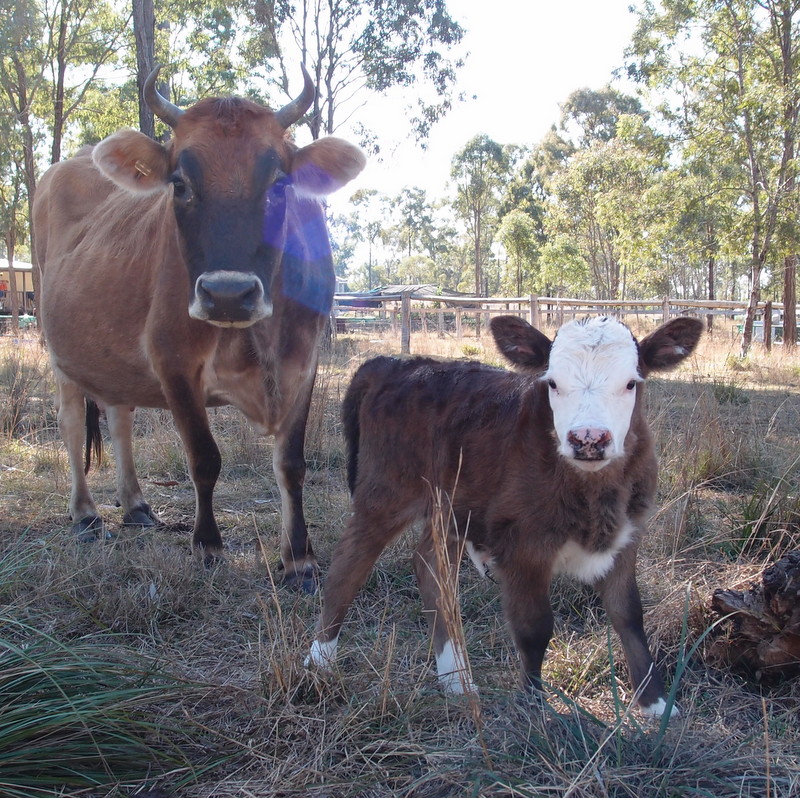
Showing posts with label cow. Show all posts

Monday, June 20, 2016

My favourite house cow blogs

I don't know many people in real life who have house cows.  A few acquaintances, but no good friends with whom I can talk regularly about cows.  Like many of my interests, I turn to blogs to find like-minded people who are happy to talk non-stop about cows, manure, hay, minerals, pasture, milking schedule and bottle-feeding calves!  As well as enjoying the topic of conversation, I also learn so much from these blogs, even though they are in different locations.  It seems like you can always learn more about house cows (aka family cows, dairy cows or milk cows).  I want to share my favourite house cow blogs with you today and I hope you can tell me about other sources of house cow information.

Jembella Farm
Sally writes from 16 A in South Australia's Barossa Valley, where she has " 2 dogs, 7 cows, 2 alpacas, 5 geese, 35 chickens, 78 sheep and a few bee hives".  Among the cows are three special house cows, Daisy, Bella and Lavender.  Sally raises foster calves with her house cows and her blog contains plenty of advice about house cows and calves - here's one of my favourites.


eight acres: favourite house cow blogs
Source: Jembella Farm

Throwback at Trapper Creek
Matronofhusbandry writes from her 180 A farm and homestead in Oregon, USA.  Sharing gems of wisdom about growing and eating real food, including an extensive vegetable garden, beef cattle, chickens and of course, her gorgeous cow. Jane.  Although the climate there is very different, observations about grass growth, paddock divisions, milking schedules are all relevant and useful.  I have learnt to much from this blog, and the photos are amazing. Here's all the cow posts, and a couple of my favourites:

Share Milking

Is my cow getting enough to eat?

eight acres: favourite house cow blogs
Source: Throwback at Trapper Creek


The Prairie Homestead
Based in Wyoming, Jill has shared her homesteading journey on her blog.  She has goats, chickens, and a lovely family cow called Oakley.  You will find plenty of basic information about house cows, most of it is summarised in this post - Owning a family cow: your questions answered
.

eight acres: favourite house cow blogs
Source: The Prairie Homestead


Homestead Honey
Teri homesteads in Missouri on 10 A.  She blogs about topics such as gardening, building a tiny house, living off-grid and homeschooling.  Most importantly, she also has a sweet cow called Creme Brulee, and many posts about family cow ownership.


eight acres: favourite house cow blogs
Source: Homestead Honey


The Elliot Homestead
Shaye lives on a few acres in North Central Washington, a giant flock of laying hens, meat chickens, hogs, sheep, turkeys, and a variety of produce in large, organic gardens.  She has recently welcomed a new dairy cow, Cecelia, after tragically losing a previous cow.  Lots of great info about cows as well as dairy products.

eight acres: favourite house cow blogs
Source: The Elliot Homestead


One Ash Homestead
Lee Ann and Alexandrea write a blog about their farm and dairy supply business i South Carolina.  Of course their blog is full of information about dairy cows and dairy products, their full story is in this post.


Which blogs featuring house cows do you love?


Wednesday, May 25, 2016

Supplement feeding your house cow

I wish we had luscious green grass for our cow year round, but like most places, we only have green grass for short periods.  In winter, we don't get much rain at all, and our sub-tropical grass species die off with the cooler weather.  This is when we need to feed our house cow extra hay and grain to supplement the meager offerings in our pasture.  Understanding how much to feed is important, as you don't want a fat (or a skinny) house cow (see my post on house cow body condition here).

Fortunately there is some great information available.  I found the book  Keeping a Family Cow: The Complete Guide for Home-Scale, Holistic Dairy Producers (affiliate link), by Joann S. Grohman to be particularly helpful.  I first reviewed Keeping a Family Cow back here, when I borrowed it from the Brisbane library.  I've since bought a copy because I hadn't been able to read it all in detail the first time.  Now I can go through each chapter and take in all the information.  One chapter that I really wanted to come back to was the one about feeding your cow.  Its quite a long and complicated chapter, so I've summarised the key points below.


eight acres: supplement feeding (hay or grain) for a house cow and other cattle
Feeding hay in winter

  • The first thing to understand is that a cow is a ruminent, meaning that she has four stomachs.  This allows her to digest the fibre (cellulose) in grass (all herbivores have some kind of digestive adaptation, as this article explains).  In the cow, the rumen (first stomach) is full of bacteria that live on the cellulose and other nutrients.  The bacteria produce amino acids (protein), which passes through to the rest of the gut for absorption much the same as a human stomach. 
  • The bacteria also produce acetic acid (vinegar) which is absorbed by the rumen and directly converted to milk - therefore grass and hay make milk.
  • This makes the cow uniquely efficient - she (along with an army of microbes) can convert grass, of no nutritional value to humans, into highly nutritious milk.
  • Dairy cows have been bred to give more milk than their calf needs, they will continue to produce milk "off their back" - meaning that they will lose fat and muscle to milk production if they are not getting enough energy in their feed.  If we are not providing enough food, a lactating cow could die from malnutrition.  However, there is no need to feed as much as a commercial dairy farm if you don't need the excess milk. you can find a balance where your cow's body condition is maintained at a healthy range and you are getting enough milk for the family, but not maximum production (or at maximum cost).
  • If you have enough good quality grass and hay throughout the year, you don't have to feed grain to your cow, however, most locations and most cows will need some grain at some time to boost the energy available to the cow and maintain body condition.
  • Given the choice, its better to spend your money on good hay and a little grain rather than relying on grain alone.  The reason for this is that the two feeds require different microbes in the gut, which thrive at different pH levels.  Feeding too much grain will lower gut pH, which will then inhibit the bacteria that digest grass and hay to create milk production.  Your cow will get fat and won't produce as much milk.
our grass in February

  • Good hay is green on the inside of the bale, it has leaves (not all stalk) and doesn't shatter and fall apart.  It shouldn't be dusty or mouldy.  It needs to be stored out of the rain and out of the sun and it can last for years in dry conditions.  If you find a good hay farmer, keep going back to buy as much as possible, many farmers do not make good hay as they don't understand cow nutrition (they will leave it too long to cut when they will get MORE bales, but past the mature stage of the grass, so not as high quality feed).  The same goes for dead dried grass in the pasture - sure it provides bulk, but not enough energy or protein for the cow.
  • Cows will eat LESS poor quality hay because it fills up her rumen and takes longer to digest.  A cow will eat until her rumen is full and later rechew the food (this is when she is chewing her cud, you know how they just stand or lie around chewing and staring into space?).  

  • Do not feed grain on an empty stomach (better yet, do not let your cow's stomach get empty at all!  If she can maintain a steady population of microbes, her digestion will be better overall).  Grain is small and will pass right through the rumen without other bulk of hay or grass to hold it there long enough to be digested by microbes.  If you see grain in your cow's manure, you know its not being digested (the chickens love scratching through cow manure to find the grain!).
  • You can feed any kind of grain, we buy a milled mixture from a local grain wholesaler, it doesn't contain any additives.  Milled grain is digested better as its got more surface area than whole grain, however the oils will oxidise and it won't last as long.  We use diatomeceous earth to keep the bugs out, and store the mill grain in sealed drums.  Sprouted grains in another good idea for maximising nutrition from grain - I haven't tried that for the cows yet.  (I found some examples of growing fodder for chickens which could be scaled up - how to grow wheat grass for chickens and why you should grow fodder and how to do it).
  • Feed hay using feeders to keep it off the ground - we have round bale feeders and small bale feeders.  Cows will pick through and eat what they like.  Expect that 10-30% of the hay will end up on the ground, but don't consider that as waste, its organic matter for your pasture (and mulch for your garden).
  • If you are lucky enough to have grass available year round, note that grass of a particularly length is best for cow digestion - around the length the a cow would naturally bite off a blade of grass.  Pasture can be managed by rotational grazing to use the grass at the optimal length.  This also means that chaff (hay that is chopped into small pieces) is not ideal.

The main thing I got from all of that is that we should be buying the best hay we can find and adding a bit of grain to our cows' diet when we see them start to lose body condition.  As much as I would love to have everything "grass fed", we can't provide that at the moment, so we have to make sure our cows get what they need from their feed.

What do you think?  Do you feed hay or grain?  Is your grass green and luscious?  

You can find more house cow information in my eBook here.

Wednesday, April 20, 2016

What time of year is best to have calves?

Its mid-autumn and our nine angus-cross heifers are currently calving.  This may seem an odd time of the year to have calves, and certainly in the temperate areas you would expect to see baby calves and lambs in spring, but in the sub-tropics we can do things a bit differently as we don't have a cold winter.  The problem is that cow gestation is around 9 months, so you really don't know what conditions are going to be like by the time the calves arrive.


eight acres: what time of year is best to have calves?


Ideally you want your cows to have their calves at a time when they are going to have plenty of grass to eat to make lots of milk to feed their calves.  In temperate climates, springtime is ideal as spring rains will bring grass and the calves will grow fat over summer.  For us, spring can often be the driest time of year, and summer brings drought, heatwaves, or flooding rain and paralysis ticks. Sometimes we have lots of green grass in summer, but its not reliable.

In the sub-tropics, autumn is cooler, but also tends to be drier.  We find that grass is starting to go to seed, dry out and does not have as much nutrition as green grass.  By winter we've usually had some frost and our tropical grasses are all dead and dried out.  There's really no great time for us to have calves, but autumn is a bit better than other seasons and we always make sure we have hay ready to feed if the grass is too poor.  Of course, all of this is different if you have irrigated forage to feed your cows!

eight acres: what time of year is best to have calves?


With our dairy cows we don't worry so much about the season, as we can help our cows look after their calves.  However, we really have to think ahead 9 months and make sure that we will be available to milk the cow twice daily for at least 6 weeks after she calves.  Again, its difficult to look ahead 9 months and predict whether it will be a good time to have a calf!

One more thing, cows tend to hide their calves in the grass and pretend they don't have a calf.  This can make it difficult to find them!


eight acres: what time of year is best to have calves?


When is the best time to have calves where you farm?


Wednesday, January 20, 2016

Cows with horns?

I know there is a bit of confusion around cattle and horns.  I've heard a few people say that they thought only bulls had horns.  I suppose that makes sense... but its wrong!

Most cattle are born with horns.  Both male and female.  You might not see many cattle with horns because they are usually removed at a young age.  There are two reasons for this, firstly the horns can grow back into the animal's skull, and cause problems.  Bella had horns like this and we had to remove them when she was an adult, causing her considerable distress.  The other reason is that cattle with horns can injure other cattle when they are loaded onto trucks, so any cattle that are destined for feedlots and/or abattoirs are generally dehorned, as are dairy cows who have to stand next to each other to be milked.  They also have the potential to harm humans.

You might have noticed that our beautiful Molly cow does have horns.  We chose not to remove her horns because I think its a painful procedure for young cattle and not necessary if they are living on a small farm.  Yes Molly does toss her head around sometimes when she's frustrated and she could unintentionally hurt us (I like to think she wouldn't mean it), however she is very tame and we just have to manage her appropriately.  I believe that Molly has lovely straight horns because we fed her well, with lots of minerals and her mother's milk until she was 14 months old.  We don't have all the details of Bella's early life, but I gather that she only had milk for 3-4 months and probably wasn't fed well.  Prior to mass production of milk, dairy cows always kept their horns and their correct conformation was one way to judge the health of the cow (we have a few old dairy books with images of beautiful horned dairy cows!).

Polled cattle
Some cattle have been bred very carefully to have no horns.  There are called "polled" cattle.  The angus steers and cows that we have at the moment are all polled.  Generally their progeny should also be polled.  I think this is the best option, as you don't have to hurt the animal to remove horns and you don't have management issues.  However, cattle without horns cannot defend themselves or their calves against wild dogs.  If you know you have a problem with dogs, it might be good to have a few cows with horns.

If you breed a polled animal with a horned animal, you may get offspring with horns, polled, or with "scurs" (not to be confused with scours!).  These are wobbly horns that are not attached to the skull.  They don't need to be removed for transport as they don't pose a danger to other animals, but they can easily break off too.

When we had the braford cattle I learnt that its very difficult to breed a polled brahman (bos indicus) crossed with a bos taurus (such as a braford, which is a brahman hereford cross) because the genes for horns are different in the two species, so its difficult to line up the recessive traits and breed a true polled animal.  Unfortunately brahman cross animals do well on our property, so it might be difficult to find the right polled animal for our place.

Dehorning
True horns are actually attached to the skull of the animal.  If you remove them when the animal is very young, they are not quite attached completely.  There are various "dehorning" tools, most of them involve scooping the horn out of the animal's head.  There is a lot of bleeding.  It looks painful and I don't want anything to do with it unless its absolutely necessary.  We removed Bella's horns because they were growing into her head, but apart from that we haven't removed any horns and as a result we sometimes don't get as good prices at the sale yard when we send horned cattle.  They can actually devalue the entire truck load as they could have bruised the other cattle.

We have only ever had polled or dehorned bulls and I would prefer not to have a bull with horns.  There is just an extra unpredictability with bulls and I don't want to give them any extra power to hurt me!

So if you see cattle with horns, don't assume that its a bull!  But don't get into the paddock to find out either!  What do you think?  Do you dehorn?  Buy polled?  Or manage horns?


eight acres: why do some cattle have horns?
Our mini-bull doesn't have horns

eight acres: why do some cattle have horns?
Polled Angus steers - no horns

eight acres: why do some cattle have horns?
Baby house cows - starting to grow horns

eight acres: why do some cattle have horns?
Miss Molly cow - definitely has horns,
but her calf Chubby had a polled sire, and she doesn't have horns

Wednesday, November 4, 2015

The story of our house cows - part 3

Another year has past and things have changed again for our two house cows Bella and Molly.  Catch up with part 1 and part 2, I have been waiting for the right time to write part 3, so much has happened in a year!

If you need to catch up, you can read part 1 and part 2. In summary, about five years ago we bought our first house cow, Bella and she came with a young heifer calf, Molly. Since then, Bella has had three more calves: one that died and was replaced by foster calf Romeo, then Nancy, and then another this year that died and has been replaced by foster calf Charlotte. Molly has also had three calves: Monty, Ruby and Chubby. They both had a long break between their last calves because our little bull Donald got sick and we didn’t know if they were in calf. We replaced Donald with Donald the second, which resulted in these last two calves. Confused?


eight acres: the story of our house cows part 3
Charlotte, Rosey and Chubby

When I wrote last year, the first Donald had just died, but we thought that both cows were in calf. We had dried off both cows and were waiting. After a few months we accepted that we weren’t going to have any calves, and even worse, that we wouldn’t have any raw milk for several months. This was disappointed, and in some ways I felt that we had failed as cow owners, but it was nice to have a break from milking and really didn’t have to do much to look after the cows in that time, they were just off in a neighbour’s paddock with Donald the second.

When it came close to calving time, I brought Bella back home as her udder was swollen and we thought she would calve soon. We actually had another 6 weeks to wait and poor Bella just kept swelling. I’m finding it difficult to get a lot of information about her condition, she seems to have had oedema, which can be caused by an allergic reaction to the growing baby, and mineral deficiencies. Both of the calves that died were from Lowline breed bulls, so we wonder if that is the cause. But it could be anything. I get the impression that dairy cows with this type of problem are culled, rather than doing any research to figure out why they are sick, which makes sense when you’re running a dairy farm, but I’d love to know how to help our house cow!


eight acres: the story of our house cows part 3
Molly with her calf Chubby

When Bella went into labour on a Sunday morning, we were both home and I went into the paddock with her. I saw the calf being born and I tried to revive him, but he was dead. Poor Bella, she licked him clean and mooed at him. We immediately got her two foster calves, as she had fostered Romeo so well last time this happened (I don’t know why we thought two was a good idea though). We got a Jersey heifer and a Jersey cross Australian Red heifer (Charlotte and Rosey), thinking we should take the opportunity to raise some replacement house cows rather than steers.

Unfortunately Bella was really sick this time. She took about a week to recover from the oedema and got mastitis again. Pete had to keep her in a small yard so that she didn’t walk too far away from the milk bales, because she could barely walk and waiting for her to hobble back to the bales was awful. It was not sensible to leave the foster calves with her for a couple of weeks while she was recovering.

And in that time the calves got paralysis tick poisoning! In a week they went from boisterous, active little calves to listless and unable to drink from a bottle. Pete thought they had scours, but when I tried to give one of them an electrolyte mix from a bottle, I found one tick and then another (to be fair, Pete had been feeding them from a bucket with a teat and hadn’t needed to handle them, so hadn’t noticed the ticks). At least now we know what to do for them when we find ticks.... we rolled them over and removed every tick we could find (15 on one calf!), we dosed them with nasty insecticide and put ear tags in both ears. Then bottle fed them electrolyte and Bella’s milk until they were well enough to use the bucket again. This set us back several weeks, so that even when Bella was well, the calves were not strong enough to take milk from her.


eight acres: the story of our house cows part 3
Cantankerous Bella

The calf fostering didn’t go as well as last time, maybe it was the time delay or just how ill Bella was at first. Eventually she has accepted Charlotte the more confident of the two calves, but not as forthrightly as she did with Romeo. Rosey has tried, but hasn’t been allowed to drink from either cow, so we have been milking and feeding Rosey.

Molly had her calf not long after all of that, and everything went well, in fact she was hardly “bagged up” at all, with far less swelling than her previous calves. Pete was home for the birth, which was nice and quick. Her tiny calf is part mini Hereford and Low line, so she has a different shape to the dairy animals. We started calling her Chubby and it stuck. Molly is doing a wonderful job looking after her calf and we have been making sure that Molly has plenty to eat and doesn’t lose condition as she did with her last calf.

Pete was milking both cows for a while, but then Bella got mastitis again and kicked him in the head during milking. We have since read that cows imprint very strongly when they first meet someone and keep grudges. Pete had originally tried to “discipline” Bella when we first got her, and I think maybe she is holding some resentment towards him. Sometimes she will only come into the milking bales if I’m there. Anyway, from that day Pete stopping milking her and stopped giving her grain to eat (to reduce her milk production), and stopped feeding any milk to Charlotte, so now Charlotte is milking Bella for us, and sometimes she gets kicked too.


eight acres: the story of our house cows part 3
Fresh Raw Milk is flowing again!

Its been a crazy few months and that’s why I’ve been waiting for the right time to write this update. Molly has grown into a wonderful cow, she has easy births (so far) and stands quietly in the milking bales. We’ve never had to give her antibiotics. Her only problem is a sensitivity to buffalo fly that leaves her itchy all over, and I really feel for her because I have the same problem with mosquito bites.

On the other hand, we have Bella, with two dead calves, a bad temper (possibly because she is often in pain from underlying mastitis infections, and doesn’t like Pete) and a very uncertain future. It seems unfair to breed her again and potentially put her through oedema again. But a dairy cow that can’t breed is not much use to us. While it would be nice to think she could just stay on our property as a pet, even if feed cost wasn’t an issue we would also have make sure the bull never got to her. We are left with few options, sell her (for meat, not to be breed again), shoot and bury her or eat her ourselves. None of these appeal to me at the moment.

Right now we have some time, Bella is still useful to us as a foster mother to Charlotte, but after that, we will have to make a decision. I know some people don’t bat an eyelid at sending their cow to the meat works and getting a new one. I understand that, I’m like that with nearly every other animal on the farm. With the house cows I was not prepared for this eventuality, I thought they would live here until they died. It makes me realise that we need to have plans for unhappy endings, so that we don’t come to unexpected difficult decisions.


Monday, June 15, 2015

Managing house cow body condition

Dairy cows are naturally skinnier than beef cows. They are bred to produce milk, not meat! But it can be tricky to know whether your cow is too skinny, or too fat, as both can cause serious problems.

house cow ebook - cow body condition
Bella a few weeks of calving and Molly inspecting my boot

A useful method for assessing cow condition is the “body condition score”, which is basically a method of ranking how boney a cow looks (more details with lots of photos of different cows here, see a chart for cow, horse, sheep and dog body condition here). Look at your cow and how many ribs and spine bones you can see, and how her tail sits, and give her an average score. A diary cow should be around 2.5-3, ideally you will see the back three ribs, but not the front ones.

Every cow is different though, and a cow’s body condition will change over time, early in her lactation when your cow is giving the most milk she will lose condition (get skinnier). Some cows seem to just give everything they’ve got to make more milk and get skinnier and skinnier until you dry them up (Molly has had to be dried up early both lactations because she was getting too skinny no matter what we fed her). Ideally your cow should have the opportunity to put on condition (get fatter) in the weeks before she has her next calf, and this should happen naturally as her body stops producing milk. But don’t let her get TOO fat either, as that can cause birthing difficulties.

Throughout your cow’s lactation its really important to monitor her condition and adjust her feed and milking routine to keep her in around a 2.5-3. If she does get too skinny or too fat, she won’t cycle and get into calf again. She could also have compromised health. See “Keeping a family cow” for more information on cow digestion and optimal feeding. Your cow is an expensive investment, and in order to get the most from her, you need to look after her and provide her with top quality feed. If pasture is not available, then good quality hay is essential. You may also supplement with grain for extra protein, and you MUST provide additional minerals.

If your cow losses weight suddenly with no corresponding increase in milk production or change in diet (i.e. no obvious reason for it), she is probably unwell. There are a few possible reasons, some more serious than others. If the cow seems alert and otherwise well, you might have a bit of time to eliminate some of the possibilities, but if she is clearly unwell, contact your vet immediately. The first cause that comes to mind is worms. We use copper sulphate and diatomaceous earth to worm our cows, and don’t regularly use a chemical wormer, but if a cow loses weight suddenly, you should try to get a stool sample to a vet for a worm count and the chemical wormer might be your quickest option to get that under control if you have a positive result.

Another important sign of ill health is your cow’s coat. It she is getting all the nutrients she needs, she should have a smooth, sleek coat, it will be longer in winter, but it should never be rough and patchy.

If you're new to cows you might not be familiar with how they should look, so I hope this helps to monitor the health of your house cows from their appearance.  Any questions or suggestions?


Skinny Cow (rating 2) - this is Molly just after we weaned her calf, probably on the skinny side, but the more we fed her, the more milk she made, some cows are just like that.  All we could do was wean her calf, dry her off and feed her as much hay as she could eat.  She eventually gained the weight (put on condition), but we will have to manage this with her next calf (possibly wean the calf early again).

you can see all her ribs, including the back "pin bones"

house cow ebook - cow body condition
hip bones very prominent

house cow ebook - cow body condition
tail sunken


Fat Cow (rating 3.5-4) - Bella had a year off having a calf and milking, so she got a little too fat.  This is what you would want a feeder steer to look like before going to the sale yards!  Not a cow!

house cow ebook - cow body condition
you can hardly see any ribs

hip bones not visible

tail raised


Buy my ebook "Our Experience with House Cows" on ScribdLulu and Amazon, or email on eight.acres.liz at gmail.com to arrange delivery.


Reviews of "Our Experience with House Cows"


Gavin from Little Green Cheese (and The Greening of Gavin)

Wednesday, March 18, 2015

How to choose a milking machine

If you decide that you want to use a milking machine with your house cow you are going to need to choose between a few different options. Unfortunately, you get what you pay for, so don't be tempted by a cheaper model until you understand why its cheap. If you can, go and visit someone with a milking machine, or go and see a display model, so you understand what you are buying.


house cow ebook: how to choose a milking machine


Many of the “mini” milking machines that you can buy are made for taking to shows for milking demonstrations. These are just small versions of the big milking machines found in commercial dairies. There are also some cheaper models made specifically for home milking, but we weren’t sure if they were the same quality.
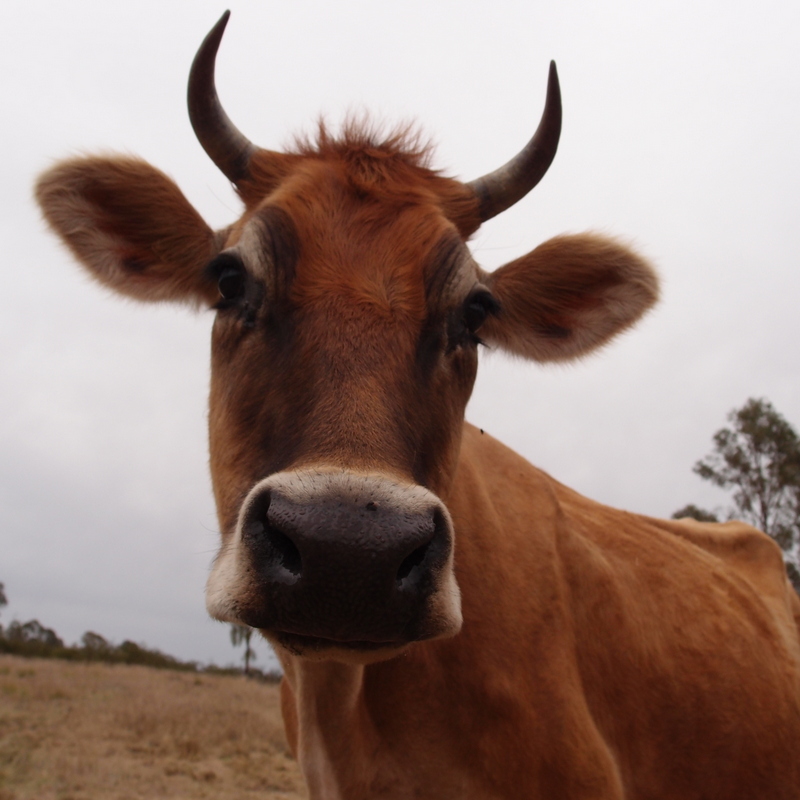

Milking machine parts
Most milking machines consist of a claw, four teat cups (metal shells and rubber liners), a long milk tube, long pulsation tube, and a pulsator. The claw connects the short pulse tubes and short milk tubes from the teat cups to the long pulse tube and long milk tube. Claws are commonly made of stainless steel or plastic or both, ours is clear plastic, so we can see the milk coming out of the teat cups.

How does it work?
Milking machines use a continuous vacuum applied inside the soft liner of the teat cup to massage milk from the teat by creating a pressure difference across the teat canal. The vacuum also helps keep the teat cups attached to the cow. Air enters the pulsation chamber about once per second to allow the liner to collapse around the end of teat so that the milk is released from the teat into the cup. The four streams of milk from the teat cups are combined in the claw and flow to the collection vessel via a plastic tube. Essentially, it’s very similar to the action of squeezing and releasing used for hand-milking. 

house cow ebook: how to choose a milking machine
 

How to use a milking machine
To operate the milking machine we turn it on and use the valve on the claw to seal the vacuum until it builds to 15 psi. Then we get down behind the cow and release the valve as we put the first teat cup on the first teat, this causes the vacuum to release until the teat cup is sealed around the teats. We quickly put the rest of the cups on the remaining teats and the vacuum holds them up while removing the milk. We watch the udder and milk flow until we’ve taken enough milk, then we use the valve to seal the vacuum again and gently remove all the cups in one movement. We then release the vacuum and turn off the machine at minimum vacuum (around 5 psi).

Cleaning the milking machine
After milking, the milking machine is cleaned very quickly and easily by sucking up a bucket of water with a little detergent and then a bucket of clean warm water. We were told by the manufacturer to use only warm water, not even the hot water from the tap, because any vapour sucked into the vacuum pump will damage the pump. The water is then tipped on the garden and the milking machine is left to dry out until the next milking session. We bought a BBQ cover to go over the milking machine to keep it clean and out of the sun (we keep it under porch on the side of our house).

How to choose a milking machine
Milking machines are expensive, our machine cost about $1700 in 2011, but you may also be able to find a cheaper one second-hand. Now that you have a better understanding of the milking machine, you will be able to compare the options available.

Here's a few things to consider:
  • Hygiene – will you be able to quickly and easily clean the machine after milking?
  • Durability and quality of materials – is the machine good quality? is it going to last?
  • Moving parts and spare parts – generally moving parts tend to wear and may not last as long. Also, can you buy spare parts? Can you replace individual items that wear quickly like the teat cup inserts, or do you have to buy larger items, like the entire teat cup?
  • Noise levels – all of the milking machines use an electric motor on the vacuum pump, it means that you have to connect to electricity and it is quite loud. Some models may be worse than others.
  • Type of vacuum pump – different systems come with different pumps, you need to make sure that the pump will draw the required vacuum (at least 15 psi) and, if possible, find out the manufacturer. A cheap pump may not work reliably and may fail completely.
  • Warranty – how long is the warranty valid? Does it cover all parts?

I’m not saying that you shouldn’t buy a cheaper system, but its important to understand why one system is cheaper than another. We decided we wanted to spend more on a quality system that will have spare parts available, and so far that has been a good decision for us. You may want to try a cheaper system and take your chances.

What do you think?  Do you use a milking machine?  How did you choose your system?

Monday, November 10, 2014

The story of our house cows - Part 2

In part 1 of the story of our house cows I explained how I didn't really want a house cow at first, but after meeting our lovely Bella, I was persuaded that it would be worth the effort. We brought home Bella and her little calf Molly and spent several months learning how to milk and how to make cheese.  I've included lots of links back to posts that get into more detail, so if you want to know more, follow the links.


Molly with baby Monty
Bella with her adopted baby Romeo
We didn’t tackle the problem of getting Bella in calf again until about six months after we brought her home, and we used the vet to do artificial insemination. This resulted in a successful pregnancy, but the much-anticipated calf died, we weren’t home, so we’ll never know what really happened. Fortunately Bella accepted a large Friesian foster calf after a week of him following her around the paddock and we were able to continue our milking routine.

Meanwhile we had weaned Molly at about 12 months old and by then we had also bought a small Dexter bull, because it can be difficult to AI a heifer. Donald took care of that, and Molly was in calf too. Molly had a quick and successful birth of a tiny bull calf, and was no trouble to milk except that she couldn’t always remember how to come into the milking bales (Molly is not as smart as her mother and often gets “stuck” on the wrong side of a fence when she forgets where the gate is).

Bella’s next calf was a lovely healthy girl, but Bella developed a serious case of mastitis, and had to have antibiotics this time, as the natural methods didn’t work quickly enough. The vet also suspected metritis, although this was never confirmed. 
 
Bella with baby Nancy
Molly with baby Ruby
Molly has turned out to be a huge milk producer and got very thin with her first calf, so we had to wean her calf early. This is when we learnt the challenges of drying off a high-producing cow. Bella was much easier to dry off as she never makes much milk towards the end of her lactation, but Molly was still making 10 L a day! No wonder she was skinny and the calf was very fat. Donald the bull did his job again and Molly’s second calf was a little girl.

Bella got mastitis again when we dried her off before her next calf, and had to have antibiotics again. This is really not how we hoped to manage our cows, but I think Bella had a rough start to life and doesn’t have the natural health that Molly enjoys. And then Bella’s next calf never appeared. We gave up waiting after a few months, realising that she had either miss-carried or had never been in calf. Around this time Donald died, we think from eating lantana, which can be very poisonous for cattle. Without our bull, we were back to AI to get the cows in calf, and we were having a tough time working out when they were on heat. Cows are very vocal when they are younger, we certainly know when the two heifer calves are on heat, but not their mothers.


Our little bull Donald

Molly was getting thin again, so we had to wean her calf and dry her off too, and then we had no milk! Two house cows and no milk is not a good management situation, but we are still learning.

Then we heard about another small bull for sale in the area, even though bulls can be very very annoying at times, we decided he would probably do a better job. When bully arrived he was very interested in Molly. Dammit. Looks like Donald didn’t get a chance to mate her before he died. It could be a while before we have a calf again! 

Bella is a special cow

Bella is looking very fat and healthy. We don’t know if she is in calf, or if the metritis has affected her fertility. Tough choices lie ahead, but honestly I can’t see us selling her or eating her. I know some small farmers keep their cows for a few years, then send her off the meat works and get a new one, but Bella is special. She is our first cow and we really have a bond with her. (I told you she was crafty!).  When a cow gives you her milk, its like you're one of her calves, and it really feels wrong to me not to look after that cow, even if you can't give you another calf.

In a few weeks we will get the vet to come and pregnancy test the cows so we know what to expect. Its kind of nice to have a break from all the milking and cheese-making, but I’m missing the raw milk. To be continued.... read Part 3 here.

Here's Molly again
I'd love to hear your house cow stories! Tell me all about your lovely cows :)

Monday, October 13, 2014

Milk cow kitchen - book review

I've said this before, I'll say it again, if you want to get a house cow, you need to read every book you can find on cows.  Even if you don't agree with everything in every book, the more you read, the more you will understand what your options are.  And some books cover different topics in more detail.


Mary Jane Butters very kindly sent me a copy of her beautiful book "Milk Cow Kitchen" for review.  Mary Jane also hosts the Heritage Jersey chatroom, which is a great forum to chat and learn about house cows.  Its free to join, so head over there and take a look (but don't forget to come back to read the rest of my review).

The thing that I like best about Milk Cow Kitchen is the photos.  Not just the beautiful cows (and cow girls) but also the detailed step-by-step shots.  Its one thing to read about how to hand milk or how to use a milking machine, but having photos of each step is a huge help.  A few other topics that Mary Jane covers in detail that I haven't seen discussed in other books includes:

  • pastuerisation and chilling the milk
  • santisation of the milking palour and the cow teats
  • transporting cows
  • putting down a cow :(
  • crochet with baling twine!
And I didn't even mention all the recipes yet.  Even if you don't have your own cow, if you have access to milk, you will want to use some of the recipes, including cheese and ice cream, all expertly photographed and looking delicious.

I know it may seem like there are a lot of books available on milking cows, but I do think that they are all different, and its worth reading widely to prepare for any situation.  I would certainly add this one to your reading list, as it covers a number of topics that don't appear in other books, as well as the wonderful photos. 

What other house cow books can you recommend?


Buy my ebook "Our Experience with House Cows" on ScribdLulu and Amazon, or email on eight.acres.liz at gmail.com to arrange delivery.


Reviews of "Our Experience with House Cows"


Gavin from Little Green Cheese (and The Greening of Gavin)

Wednesday, September 10, 2014

The story of our house cows - Part 1

You’ll probably be surprised to know that it was Pete who really wanted to get a cow, and at first I didn’t think it was such a good idea. I thought it seemed so expensive, I thought we didn’t have enough land and I didn’t know what we would do with all the milk. Eventually we negotiated a solution. He agreed to sell his boat (which had been sitting in the car port unused for three years) so that we could pay for the cow and the milking machine. And somehow he persuaded me that we needed a cow. Or maybe it was when I first met Bella that I was persuaded, I can’t remember now.

Bella and Molly when they first arrived

Pete told our dairy-farmer friends that we were looking for a cow. I didn’t expect them to find us a cow for months, or maybe even a year, but only a few weeks later, they told us about Bella. She had been born at the dairy farm, but bottle-fed by a neighbour and raised as a tame cow, then returned to the farm when the neighbour moved. She was about to have her second calf. She didn’t fit in with other cows because she was so tame. When we first met her in the paddock, she stood still while we patted her, as all the other cows moved away from us. I felt sorry for her! Also one horn was growing in towards her head, poor thing. We couldn’t leave her at the dairy farm!

We went home to get organised. We converted a crush that we were making into a milking bale and chose a milking machine. We ordered stainless steel buckets and a cow brush. We bought milk jugs and cheese making supplies. Finally we were ready to collect Bella about six weeks after she had her calf, Molly. 
 
Bella with Molly

And so began our inauguration to the world of dairy cow drama. It seems that nothing is simple with house cows! Its not their fault really, they have been bred by humans to make so much milk, they are susceptible to problems with mastitis, milk fever, and they have to be fed properly with plenty of minerals. They do really required more care than beef cattle.

First Bella did not like where we set up the milking bales, so early on the first morning we had to pick them up and move them further from the house and closer to the paddock so we could guide her in there through the gate. We were lucky that she was so tame and would follow a bucket of grain. With two extension cords, we were still able to use the milking machine in that location. Bella has never been easy to milk, we call her “Mrs Kicky” (also “Mrs Picky” when she won’t eat her hay), and was certainly not an easy cow to learn to milk. She also got mastitis early on, which we managed to treat with natural methods. Meanwhile we tried to tame Molly, first by bottle feeding her (that idea lasted a week), and then just by spending time with her while she was eating a small amount of grain.


Molly getting tame (they always lick my boots!)
We didn’t know at first that we didn’t HAVE to separate Molly from Bella. For months we led Molly into a calf yard, and then we realised that they could stay together, which was better for both of them. The only advantage was that Molly did become very tame and also learnt to follow a bucket of grain into her yard.  We actually waited 12 months before we weaned Molly, because we took a while to get organised with getting Bella in calf.  But that is a story for next time... Read Part 2 here and Part 3 here.

I'd love to hear your house cow stories!  Tell me all about your lovely cows :)


Tuesday, June 24, 2014

How to tell if your house cow is on heat

If you want your cow to continue producing milk, at some stage she’s going to need to have another calf.  Essentially you have two options, either artificial insemination (AI) or a bull. We have tried both. If you’re going to use artificial insemination, talk to your vet a few weeks in advance and arrange with them to have the appropriate semen ready. You will need to call them again on the day your cow is in “standing heat” (explained below) and arrange for a house call. In total this only cost us $100, but we are only 10 km from town, a vet may charge considerably more if they have to travel further. There is no guarantee that artificial insemination will work the first time and you may need several visits to get the timing perfect. When the vet came, he just asked us to lead Bella to her bales, he didn’t need to restrain her any more than we do for milking. I was surprised how good Bella was, considering how much she kicks us when we are trying to milk her, she didn't seem to mind having the vet's hand up her rear end at all!  Read the rest of this article here on Eight Acres - the blog.

You might also be interested in:

Here's the full story about Bella and AI.

And keeping a bull on a small farm.

If you want to find out more about keep a house cow in Australian conditions, buy my house cow eBook here.


Wednesday, June 18, 2014

Our Experience with House Cows is now available

Our Experience With House Cows, by Elizabeth Beavis
Available from Scribd here for only $4.99 in .pdf format.

Have you ever thought about owning a house cow but don’t know where to start?  Do you dream of unlimited raw milk, manure and beef to complement your small farm activities?  “Our experience with House Cows” is an eBook written by a house cow owner to help other small farmers get started with a cow of their own.  The eBook is written for Australian conditions, particularly sub-tropical Queensland, but much of the information is applicable to cows and cow owners all over the world.  This eBook covers the basics of getting a cow, getting her in calf, milking her and caring for her calf, all using natural methods.  The final sections explain how to use all that milk to create delicious dairy products!  The eBook references several other cow, cattle and dairy books which are useful to the new cow owner and explain some aspects in more detail.  Go ahead, learn how to realise your house cow dream today!


Thursday, May 29, 2014

House cow ebook - Our experience with house cows

I'm very nearly finished working on my house cow ebook and very soon it will be available to purchase on scribd with details coming soon!

In the meantime, check out my blog Eight Acres for lots of house cow information.