Wednesday, February 10, 2016

Raising a baby house cow

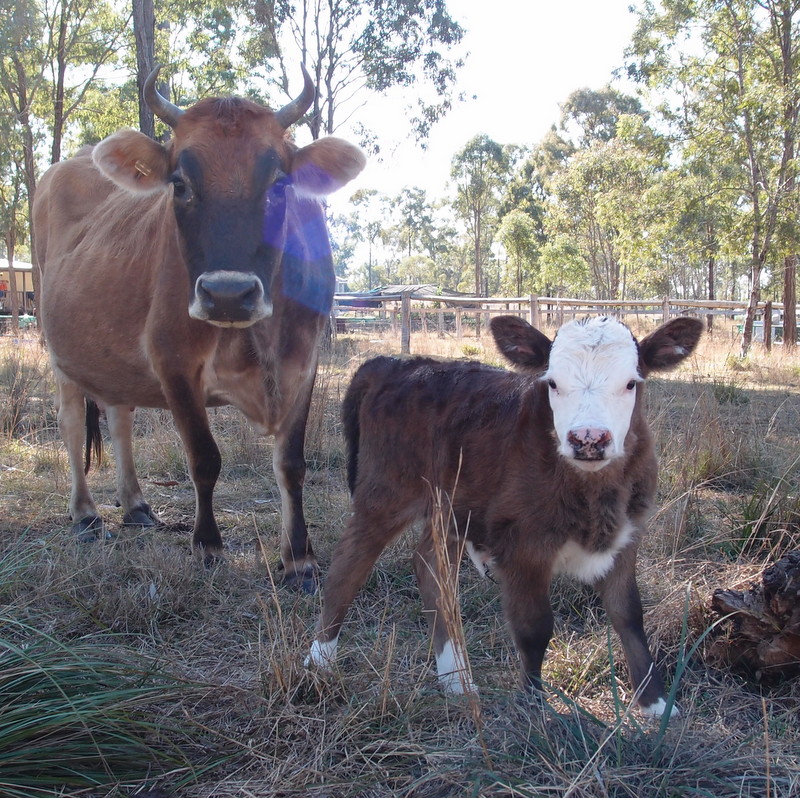
Our first house cow Bella came to us from a dairy farm and had already had two calves.  She came with her second calf, Molly, who is also a full Jersey cow.  We raised Molly to be our second house cow.  With Bella now having an uncertain future after having difficulty with her last calf, we decided to raise some future house cows.

I think they two most important inputs are human interaction (to ensure the cow is tame enough to be milked) and good nutrition (to raise a healthy robust cow).  While Bella is extremely tame, from what I know of her early life I don't think she had good nutrition and she now has health problems that prevent us using her as a house cow.  Molly is extremely robust AND tame.  Can we produce another good house cow?

(Catch up on our house cows here Part 1Part 2Part 3)

eight acres: raising a baby house cow
Charlotte and Rosey at 4-6 weeks old

As Bella's calf had died, and she had previously taken a foster calf, we got her Jersey heifer calves to raise.  I don't know why we thought two calves would work, but I guess it was worth a try.  We had a series of problems with Bella (oedema and mastitis) and the calves (scours and paralysis tick), which didn't help.  Eventually Bella accepted Charlotte as her foster calf and we've had to bottle feed Rosey.

It has been interesting to compare the progress of the two calves.  At first Charlotte was very tame.  The dairy farmer had separated her from the other poddy calves because she was too tame and kept tipping over the milk buckets.  She actually walked right up to him when we went to collect her.  Rosey was not tame at all.  We chose her because she looked pretty (bad farmers!) as she is a Jersey/Aussie Red cross, but she was the calf that kept running away and was very difficult to catch.

Charlotte stayed tame for weeks, especially at first when we were bottle feeding both calves.  Since Charlotte has secured her own milk supply and doesn't need humans anymore, she doesn't come for a scratch.  We really need to work on getting her tame again, I think when she is weaned we will feed her a little grain so she associates us with food again.

eight acres: raising a baby house cow
Charlotte with foster mother Bella

Rosey, on the other hand, knows her name and will run over to us, because we are her milk supply.  At first we milked Molly everyday and Rosey had a few litres until she was about 3 months old.  Most dairy farmers will wean replacement heifers at this age, but there's no reason to stop given them milk.  Since we are now only milking Molly once a week, Rosey gets the excess milk in the weekend.

Charlotte has grown a little faster, probably due to her more regular access to milk, but she also had a less severe reaction to the paralysis tick when they first came here.  Rosey seems to be doing well enough and we will keep giving her milk while we have it to spare.  I worry more about Rosey not having a mother to lick her and love her, in fact Bella is quite awful to her and will head butt her out of the way at any opportunity.  I make sure she gets plenty of human love instead, and I hope she will be accepted when she's bigger.  Bella still gives Molly a good lick bath. they have a whole herd hierarchy going on.

eight acres: raising a baby house cow
Orphan Rosey

It is a myth that calves stop drinking milk voluntarily (I see this perpetuated by vegans that have probably never met a cow).  Calves will drink until their mother literally kicks them off the udder to feed her next calf.  Full grown cows, and even bulls, will drink milk from another cow if they get the chance, and calves will happily drink for as long as they are allowed to (which is extremely detrimental to the poor cow providing the milk).  Weaning is a VERY noisy time as mother and calf bawl to each other for several days.  When reunited the calf will try to drink again even after months of separation.

The two babies are 6 months old now, so it will be another 18 months until we find out if either of them are good house cows.  I think Charlotte has had the best nutrition, but Rosey has had a pretty good start and the best we could do for her (a shame Bella wasn't more helpful!).  Rosey is currently the more tame of the two, but I'm sure we can work on Charlotte again as she started off so tame.

What do you think?  Have you ever raised a house cow?

You can find more house cow information in my eBook here.

Wednesday, January 20, 2016

Cows with horns?

I know there is a bit of confusion around cattle and horns.  I've heard a few people say that they thought only bulls had horns.  I suppose that makes sense... but its wrong!

Most cattle are born with horns.  Both male and female.  You might not see many cattle with horns because they are usually removed at a young age.  There are two reasons for this, firstly the horns can grow back into the animal's skull, and cause problems.  Bella had horns like this and we had to remove them when she was an adult, causing her considerable distress.  The other reason is that cattle with horns can injure other cattle when they are loaded onto trucks, so any cattle that are destined for feedlots and/or abattoirs are generally dehorned, as are dairy cows who have to stand next to each other to be milked.  They also have the potential to harm humans.

You might have noticed that our beautiful Molly cow does have horns.  We chose not to remove her horns because I think its a painful procedure for young cattle and not necessary if they are living on a small farm.  Yes Molly does toss her head around sometimes when she's frustrated and she could unintentionally hurt us (I like to think she wouldn't mean it), however she is very tame and we just have to manage her appropriately.  I believe that Molly has lovely straight horns because we fed her well, with lots of minerals and her mother's milk until she was 14 months old.  We don't have all the details of Bella's early life, but I gather that she only had milk for 3-4 months and probably wasn't fed well.  Prior to mass production of milk, dairy cows always kept their horns and their correct conformation was one way to judge the health of the cow (we have a few old dairy books with images of beautiful horned dairy cows!).

Polled cattle
Some cattle have been bred very carefully to have no horns.  There are called "polled" cattle.  The angus steers and cows that we have at the moment are all polled.  Generally their progeny should also be polled.  I think this is the best option, as you don't have to hurt the animal to remove horns and you don't have management issues.  However, cattle without horns cannot defend themselves or their calves against wild dogs.  If you know you have a problem with dogs, it might be good to have a few cows with horns.

If you breed a polled animal with a horned animal, you may get offspring with horns, polled, or with "scurs" (not to be confused with scours!).  These are wobbly horns that are not attached to the skull.  They don't need to be removed for transport as they don't pose a danger to other animals, but they can easily break off too.

When we had the braford cattle I learnt that its very difficult to breed a polled brahman (bos indicus) crossed with a bos taurus (such as a braford, which is a brahman hereford cross) because the genes for horns are different in the two species, so its difficult to line up the recessive traits and breed a true polled animal.  Unfortunately brahman cross animals do well on our property, so it might be difficult to find the right polled animal for our place.

Dehorning
True horns are actually attached to the skull of the animal.  If you remove them when the animal is very young, they are not quite attached completely.  There are various "dehorning" tools, most of them involve scooping the horn out of the animal's head.  There is a lot of bleeding.  It looks painful and I don't want anything to do with it unless its absolutely necessary.  We removed Bella's horns because they were growing into her head, but apart from that we haven't removed any horns and as a result we sometimes don't get as good prices at the sale yard when we send horned cattle.  They can actually devalue the entire truck load as they could have bruised the other cattle.

We have only ever had polled or dehorned bulls and I would prefer not to have a bull with horns.  There is just an extra unpredictability with bulls and I don't want to give them any extra power to hurt me!

So if you see cattle with horns, don't assume that its a bull!  But don't get into the paddock to find out either!  What do you think?  Do you dehorn?  Buy polled?  Or manage horns?


eight acres: why do some cattle have horns?
Our mini-bull doesn't have horns

eight acres: why do some cattle have horns?
Polled Angus steers - no horns

eight acres: why do some cattle have horns?
Baby house cows - starting to grow horns

eight acres: why do some cattle have horns?
Miss Molly cow - definitely has horns,
but her calf Chubby had a polled sire, and she doesn't have horns

Wednesday, December 9, 2015

Cattle in posts in 2015

At this time of year I like to do a summary of the posts from earlier in the year so that everyone can catch up on what they've missed.  You can find all my previous cattle posts here, and everything I know about house cows is in my house cow ebook.

Thank you so much for following my blog and leaving comments.  Please share you questions and experiences with cattle.


Homekill butcher day - tips and tricks

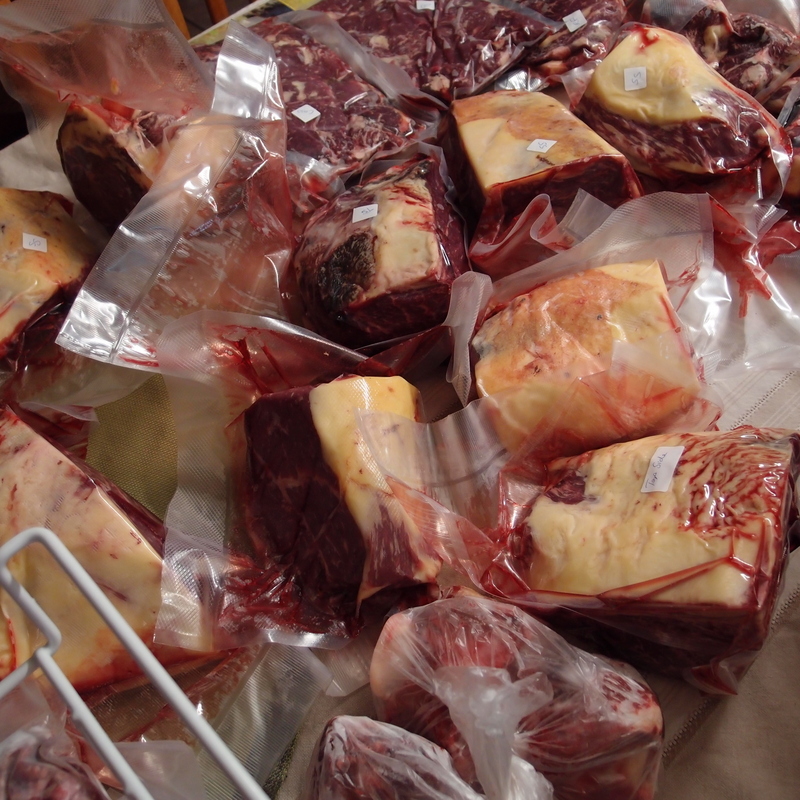
Homekill beef - two small beef cattle

The story of our house cows - Part 3

Cleaning a milking machine

Managing house cow body condition

Three day sickness in cattle

How to choose a home milking machine

Cattle terminology

Buying, selling and moving cattle


Molly with ear tags - no fly damage this year I hope

the herd hanging out

a freezer (or three!) full of beef

the last three wild braford gone for good!

29 quiet angus instead.... ahhhhh

Wednesday, November 4, 2015

The story of our house cows - part 3

Another year has past and things have changed again for our two house cows Bella and Molly.  Catch up with part 1 and part 2, I have been waiting for the right time to write part 3, so much has happened in a year!

If you need to catch up, you can read part 1 and part 2. In summary, about five years ago we bought our first house cow, Bella and she came with a young heifer calf, Molly. Since then, Bella has had three more calves: one that died and was replaced by foster calf Romeo, then Nancy, and then another this year that died and has been replaced by foster calf Charlotte. Molly has also had three calves: Monty, Ruby and Chubby. They both had a long break between their last calves because our little bull Donald got sick and we didn’t know if they were in calf. We replaced Donald with Donald the second, which resulted in these last two calves. Confused?


eight acres: the story of our house cows part 3
Charlotte, Rosey and Chubby

When I wrote last year, the first Donald had just died, but we thought that both cows were in calf. We had dried off both cows and were waiting. After a few months we accepted that we weren’t going to have any calves, and even worse, that we wouldn’t have any raw milk for several months. This was disappointed, and in some ways I felt that we had failed as cow owners, but it was nice to have a break from milking and really didn’t have to do much to look after the cows in that time, they were just off in a neighbour’s paddock with Donald the second.

When it came close to calving time, I brought Bella back home as her udder was swollen and we thought she would calve soon. We actually had another 6 weeks to wait and poor Bella just kept swelling. I’m finding it difficult to get a lot of information about her condition, she seems to have had oedema, which can be caused by an allergic reaction to the growing baby, and mineral deficiencies. Both of the calves that died were from Lowline breed bulls, so we wonder if that is the cause. But it could be anything. I get the impression that dairy cows with this type of problem are culled, rather than doing any research to figure out why they are sick, which makes sense when you’re running a dairy farm, but I’d love to know how to help our house cow!


eight acres: the story of our house cows part 3
Molly with her calf Chubby

When Bella went into labour on a Sunday morning, we were both home and I went into the paddock with her. I saw the calf being born and I tried to revive him, but he was dead. Poor Bella, she licked him clean and mooed at him. We immediately got her two foster calves, as she had fostered Romeo so well last time this happened (I don’t know why we thought two was a good idea though). We got a Jersey heifer and a Jersey cross Australian Red heifer (Charlotte and Rosey), thinking we should take the opportunity to raise some replacement house cows rather than steers.

Unfortunately Bella was really sick this time. She took about a week to recover from the oedema and got mastitis again. Pete had to keep her in a small yard so that she didn’t walk too far away from the milk bales, because she could barely walk and waiting for her to hobble back to the bales was awful. It was not sensible to leave the foster calves with her for a couple of weeks while she was recovering.

And in that time the calves got paralysis tick poisoning! In a week they went from boisterous, active little calves to listless and unable to drink from a bottle. Pete thought they had scours, but when I tried to give one of them an electrolyte mix from a bottle, I found one tick and then another (to be fair, Pete had been feeding them from a bucket with a teat and hadn’t needed to handle them, so hadn’t noticed the ticks). At least now we know what to do for them when we find ticks.... we rolled them over and removed every tick we could find (15 on one calf!), we dosed them with nasty insecticide and put ear tags in both ears. Then bottle fed them electrolyte and Bella’s milk until they were well enough to use the bucket again. This set us back several weeks, so that even when Bella was well, the calves were not strong enough to take milk from her.


eight acres: the story of our house cows part 3
Cantankerous Bella

The calf fostering didn’t go as well as last time, maybe it was the time delay or just how ill Bella was at first. Eventually she has accepted Charlotte the more confident of the two calves, but not as forthrightly as she did with Romeo. Rosey has tried, but hasn’t been allowed to drink from either cow, so we have been milking and feeding Rosey.

Molly had her calf not long after all of that, and everything went well, in fact she was hardly “bagged up” at all, with far less swelling than her previous calves. Pete was home for the birth, which was nice and quick. Her tiny calf is part mini Hereford and Low line, so she has a different shape to the dairy animals. We started calling her Chubby and it stuck. Molly is doing a wonderful job looking after her calf and we have been making sure that Molly has plenty to eat and doesn’t lose condition as she did with her last calf.

Pete was milking both cows for a while, but then Bella got mastitis again and kicked him in the head during milking. We have since read that cows imprint very strongly when they first meet someone and keep grudges. Pete had originally tried to “discipline” Bella when we first got her, and I think maybe she is holding some resentment towards him. Sometimes she will only come into the milking bales if I’m there. Anyway, from that day Pete stopping milking her and stopped giving her grain to eat (to reduce her milk production), and stopped feeding any milk to Charlotte, so now Charlotte is milking Bella for us, and sometimes she gets kicked too.


eight acres: the story of our house cows part 3
Fresh Raw Milk is flowing again!

Its been a crazy few months and that’s why I’ve been waiting for the right time to write this update. Molly has grown into a wonderful cow, she has easy births (so far) and stands quietly in the milking bales. We’ve never had to give her antibiotics. Her only problem is a sensitivity to buffalo fly that leaves her itchy all over, and I really feel for her because I have the same problem with mosquito bites.

On the other hand, we have Bella, with two dead calves, a bad temper (possibly because she is often in pain from underlying mastitis infections, and doesn’t like Pete) and a very uncertain future. It seems unfair to breed her again and potentially put her through oedema again. But a dairy cow that can’t breed is not much use to us. While it would be nice to think she could just stay on our property as a pet, even if feed cost wasn’t an issue we would also have make sure the bull never got to her. We are left with few options, sell her (for meat, not to be breed again), shoot and bury her or eat her ourselves. None of these appeal to me at the moment.

Right now we have some time, Bella is still useful to us as a foster mother to Charlotte, but after that, we will have to make a decision. I know some people don’t bat an eyelid at sending their cow to the meat works and getting a new one. I understand that, I’m like that with nearly every other animal on the farm. With the house cows I was not prepared for this eventuality, I thought they would live here until they died. It makes me realise that we need to have plans for unhappy endings, so that we don’t come to unexpected difficult decisions.


Monday, October 19, 2015

The Raw Milk Answer Book - review

I never realised that raw milk was so controversial until after we got our house cow Bella and I found out that we couldn't share her milk.  I know most people get a house cow BECAUSE they want raw milk, but we were just interested in milk in general, I hadn't really thought about the fact that it would be raw.  We were happy to drink it raw and make cheese with the raw milk.  It was until I started reading Nourishing Traditions that I realised the benefits of raw milk and how lucky we were to have our own house cow.

If you are still trying to figure out what's going on with raw milk, this book covers everything.  I would be very surprised if there is a question that you have that is not covered by this book, although it is US-based, so there isn't any Australian specific information.  He covers the history of raw milk, the risks and benefits and making the decision to drink raw milk (he doesn't push raw milk, but advocates that everyone considers their individual situation).  Then how to get raw milk, how to check that its safe and how to discuss your decision with family.


I think in Australia its even more difficult to get raw milk, as it is not legal for farmers to sell or share unpasteurised milk.  However, if you ask around you can probably find a source of milk from a sneaky farmer or "cosmetic" milk.  At least this book would help you to understand the risks and how to assess whether the milk is likely to be safe to drink.

Personally I am convinced that raw milk makes me feel better.  I actually didn't drink much milk at all before we got Bella, some weeks we wouldn't buy any milk, other weeks it would go off before we used a litre bottle.  When we got Bella (and then started milking Molly) we always have so much milk, I got used to having a raw milk and kefir smoothie daily.  So when both cows were dry recently we started buying milk from our local organic farm, and it was of course pasteurised.  I didn't realise how ill I was feeling until we started milking again and after a few weeks of raw milk I was back to normal.  I think I would rather have no milk than drink pasteurised milk.  My kefir agrees, it nearly died on the pasteurised milk, but is slowly regrowing in the raw milk.

If you're wondering about raw milk, I recommend reading this book, it will at least help you assess whether you want to try it and how you might get it.

Do you drink raw milk?


Wednesday, September 9, 2015

Cattle terminology

When reading the cattle market report, you might see something like this:

The good size yarding offered potential buyers with many pens of heavier yearling steers in forward store to fat condition.  It would appear that prices at recent physical markets have risen to producers proffering the store market over fat sales.

I thought it was time I figured out what they were talking about!  Here are a few terms that you might hear in the cattle industry, there are more in the links at the end.

eight acres: cattle terminology
three fat cows
First are they male or female?  And what age?

Bull: A male bovine with sexual organs intact and that is capable of reproduction. A mature male animal used for breeding.

Bullock - Mature castrated male cattle destined for meat production

Calf: A bovine no permanent incisor teeth, can be a male or a female with no secondary sex characteristics.

Cow: A mature female used for breeding with eight permanent incisor teeth.

Heifer: A female bovine that has not produced a calf and is under 42 months of age. After 42 months of age she is known as a 'grown heifer', unless she has had a calf, and then she is a cow.

PTIC: Pregnancy Tested in Calf – used to describe cows at a store or prime market.

Steer: A castrated male bovine showing no secondary sex characteristics.

Weaner: A young animal that has been weaned from its mother’s milk to live completely on pasture.

Yearling: Young animal, fully weaned without permanent incisor teeth. Animal does not show any secondary sex characteristics. Approximately 12 to 18 months of age.

eight acres: cattle terminology
Molly cow and her heifer calf


Types of cattle and operations

Backgrounding: Growing young cattle from the time calves are weaned until they enter a feedlot to be finished on a high protein ration.
Restocker: A producer or agent who purchases cattle/sheep/lambs and returns them to the farm - this could be for backgrounding or breeding.

Cow and calf operation: Keeping cows for the purpose of breeding and selling either weaner calves or finished beasts.

Fat or Finished stock: Animals suitable for slaughter - usually these have been fed in a feedlot, or may be mature animals, such as cull cows (older breeding cows no longer required).

Feeder steer: A steer purchased by a lot-feeder to be placed in a feedlot (generally from a backgrounding facility). Cattle specifications (entry weight, muscle and fat score, breed, age etc) are dependent on the market the animal is destined for.

Japan ox: A grown steer, weighing in excess of 500kg lwt or weighing 320 to 400kg cwt. Such animals are predominantly destined for the Japanese market.

Store Cattle - animals for beef which have been reared on one or more farms, and then are sold, either to dealers or other farmers. They are brought for finishing in feed lots, normally well-grown animals of up to two years of age 

You will see that the markets have size ranges for calves, weaners/vealers, yearlings, grown heifers and steers, cows and bulls.  Each weight class may also have a muscle score description:

Muscle score description
A: Very heavy
B: Heavy
C: Medium
D: Moderate
E: Light

Each weight class and muscle score will have an average and maximum price.

eight acres: cattle terminology
our mob of weaner steers and heifers

Types of sales

Prime sale: A regular (often weekly) physical market auction.

Store sale: A physical auction where normally cattle/sheep/lambs are bought and sold. Most of the stock offered are for breeding or future finishing.


To put all of this in context....

We did try a cow and calf operation, originally buying 25 cows and calves, and a bull through private sales.  We sold the calves as "weaners" at about 9 months old in a store sale.  The cows had more calves, which we sold.  Then when we started to run out of grass and water on the property, we sold the cows as fat or finished cows, and the bull.  Just recently, we bought a mob of weaner steers and heifers to fatten on our property (so we became backgrounders) and we will sell them as store cattle (to be fed in feed-lots).  Ideally we would like to have a smaller number of cows, and to keep the calves until they are finished on grass, because I really don't like feed-lots.

eight acres: cattle terminology
our bull with the mob of weaners


Meat and Livestock Association (MLA) glossary

Small holder series - quick guide to cattle terms


Does that help?  Are there any other cattle terms that you're still unsure about?

Monday, August 10, 2015

How to clean a milking machine

People often assume that using a milking machine would be more work that milking by hand because of the time to clean the machine.  Actually its surprisingly quick to clean after milking.  And it only occasionally needs a more thorough clean.  Much of the information you find online about cleaning milking machines refers to large scale dairies that are milking a hundred or more cows a day.  If you are only milking one or two cows you can use a simpler and quicker process, and gentler chemicals, to keep your machine clean.

The only extra-large gloves at the supermarket were pink...

After every milking, as soon as possible, we tip out the milk (either for calves or for our consumption) and clean the milking machine.  The first step is a bucket of warm soapy water (not too hot, as steam can damage the vacuum pump, and hot water can actually make the milk solids more difficult to remove), which gets sucked through the milking cups and through the machine.  We use a few drops of dishwashing detergent in the water.  We then slosh this around inside the milk can and wipe off all the hoses before tipping out the soapy water.  The next step is a rinse with a bucket of warm water (also sucked through the milking cups).  Finally we leave the milk can upside-down to drain.  This is all that is necessary after twice daily milking and takes only about 10 minutes.  If the milking machine is cleaned immediately after the milk is tipped out, this amount of cleaning is sufficient.  When the milking machine is left unwashed for longer periods (even an hour or so, if other farm chores demand attention), minerals, fat and protein from the milk will gradually form deposits called "milk stone" inside the milking machine .


About once a week, or if we haven't used the machine for a while, we give it a more thorough clean with additional chemicals to remove milk stone deposits.  It is generally recommended to use a caustic or a caustic/chlorine detergent.  You can buy specialty chemicals from a dairy supplier, but you can usually also find something suitable in the supermarket cleaning isle.  Look for a cleaner that contains Sodium Hypochlorite and Sodium Hydroxide (with minimum fragrance as you don't want your milk to taste lemon-fresh).  Both of these are strong chemicals that can damage your skin and eyes, so make sure you wear gloves and glasses while cleaning your milking machine with these chemicals.

Acid milk stone remover (based on phosphoric or nitric acid) can also be used (for example).  This would need to be purchased from a dairy supplier.  Acid cleaners are better for hard water, which tends to react with caustic cleaners and reduce their effectiveness.  Again, this is a strong chemical and care should be taken to avoid contact with skin and eyes.  You can read all about the chemistry of different cleaners here.  Never combine ammonia with acid or chlorine cleaners, as you will cause a chemical reaction, if in doubt, its best to just use one cleaner at a time.


When we do the big clean, we usually also take the opportunity to pull off all the hoses and give them a clean with a bottle brush.  We have bought a range of sizes of bottle brush, and one small one is particularly useful for cleaning the long tube between the milking machine claw and the milk can, we tie it on a piece of bailing twine and pull it through the tube a few times (hot tip from Pete, the best way to get the twine all the way down the tube is running water or compressed air).  When you first get your milking machine, its a good idea to take it apart to find out which bits you can get into the clean properly.


The queue at milking time

Do you use a milking machine?  How do you clean it?